
Description
Given the root of a binary tree and a node u in the tree, return the nearest node on the same level that is to the right of u, or return null if u is the rightmost node in its level.
Example 1:
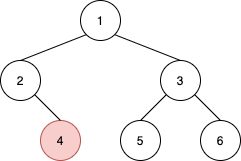
Input: root = [1,2,3,null,4,5,6], u = 4
Output: 5
Explanation: The nearest node on the same level to the right of node 4 is node 5.
Example 2:
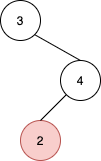
Input: root = [3,null,4,2], u = 2
Output: null
Explanation: There are no nodes to the right of 2.
Constraints:
- The number of nodes in the tree is in the range
[1, 105].
1 <= Node.val <= 105- All values in the tree are distinct.
u is a node in the binary tree rooted at root.
Solutions
Solution 1: BFS
We can use Breadth-First Search, starting from the root node. When we reach node u, we return the next node in the queue.
The time complexity is O(n), and the space complexity is O(n). Where n is the number of nodes in the binary tree.
PythonJavaC++GoJavaScript
# Definition for a binary tree node.
# class TreeNode:
# def __init__(self, val=0, left=None, right=None):
# self.val = val
# self.left = left
# self.right = right
class Solution:
def findNearestRightNode(self, root: TreeNode, u: TreeNode) -> Optional[TreeNode]:
q = deque([root])
while q:
for i in range(len(q) - 1, -1, -1):
root = q.popleft()
if root == u:
return q[0] if i else None
if root.left:
q.append(root.left)
if root.right:
q.append(root.right)(code-box)
/**
* Definition for a binary tree node.
* public class TreeNode {
* int val;
* TreeNode left;
* TreeNode right;
* TreeNode() {}
* TreeNode(int val) { this.val = val; }
* TreeNode(int val, TreeNode left, TreeNode right) {
* this.val = val;
* this.left = left;
* this.right = right;
* }
* }
*/
class Solution {
public TreeNode findNearestRightNode(TreeNode root, TreeNode u) {
Deque<TreeNode> q = new ArrayDeque<>();
q.offer(root);
while (!q.isEmpty()) {
for (int i = q.size(); i > 0; --i) {
root = q.pollFirst();
if (root == u) {
return i > 1 ? q.peekFirst() : null;
}
if (root.left != null) {
q.offer(root.left);
}
if (root.right != null) {
q.offer(root.right);
}
}
}
return null;
}
}(code-box)
/**
* Definition for a binary tree node.
* struct TreeNode {
* int val;
* TreeNode *left;
* TreeNode *right;
* TreeNode() : val(0), left(nullptr), right(nullptr) {}
* TreeNode(int x) : val(x), left(nullptr), right(nullptr) {}
* TreeNode(int x, TreeNode *left, TreeNode *right) : val(x), left(left), right(right) {}
* };
*/
class Solution {
public:
TreeNode* findNearestRightNode(TreeNode* root, TreeNode* u) {
queue<TreeNode*> q{{root}};
while (q.size()) {
for (int i = q.size(); i; --i) {
root = q.front();
q.pop();
if (root == u) {
return i > 1 ? q.front() : nullptr;
}
if (root->left) {
q.push(root->left);
}
if (root->right) {
q.push(root->right);
}
}
}
return nullptr;
}
};(code-box)
/**
* Definition for a binary tree node.
* type TreeNode struct {
* Val int
* Left *TreeNode
* Right *TreeNode
* }
*/
func findNearestRightNode(root *TreeNode, u *TreeNode) *TreeNode {
q := []*TreeNode{root}
for len(q) > 0 {
for i := len(q); i > 0; i-- {
root = q[0]
q = q[1:]
if root == u {
if i > 1 {
return q[0]
}
return nil
}
if root.Left != nil {
q = append(q, root.Left)
}
if root.Right != nil {
q = append(q, root.Right)
}
}
}
return nil
}(code-box)
/**
* Definition for a binary tree node.
* function TreeNode(val, left, right) {
* this.val = (val===undefined ? 0 : val)
* this.left = (left===undefined ? null : left)
* this.right = (right===undefined ? null : right)
* }
*/
/**
* @param {TreeNode} root
* @param {TreeNode} u
* @return {TreeNode}
*/
var findNearestRightNode = function (root, u) {
const q = [root];
while (q.length) {
for (let i = q.length; i; --i) {
root = q.shift();
if (root == u) {
return i > 1 ? q[0] : null;
}
if (root.left) {
q.push(root.left);
}
if (root.right) {
q.push(root.right);
}
}
}
return null;
};(code-box)
Solution 2: DFS
DFS performs a pre-order traversal of the binary tree. The first time we search to node u, we mark the current depth d. The next time we encounter a node at the same level, it is the target node.
The time complexity is O(n), and the space complexity is O(n). Where n is the number of nodes in the binary tree.
PythonJavaC++GoJavaScript
# Definition for a binary tree node.
# class TreeNode:
# def __init__(self, val=0, left=None, right=None):
# self.val = val
# self.left = left
# self.right = right
class Solution:
def findNearestRightNode(self, root: TreeNode, u: TreeNode) -> Optional[TreeNode]:
def dfs(root, i):
nonlocal d, ans
if root is None or ans:
return
if d == i:
ans = root
return
if root == u:
d = i
return
dfs(root.left, i + 1)
dfs(root.right, i + 1)
d = 0
ans = None
dfs(root, 1)
return ans(code-box)
/**
* Definition for a binary tree node.
* public class TreeNode {
* int val;
* TreeNode left;
* TreeNode right;
* TreeNode() {}
* TreeNode(int val) { this.val = val; }
* TreeNode(int val, TreeNode left, TreeNode right) {
* this.val = val;
* this.left = left;
* this.right = right;
* }
* }
*/
class Solution {
private TreeNode u;
private TreeNode ans;
private int d;
public TreeNode findNearestRightNode(TreeNode root, TreeNode u) {
this.u = u;
dfs(root, 1);
return ans;
}
private void dfs(TreeNode root, int i) {
if (root == null || ans != null) {
return;
}
if (d == i) {
ans = root;
return;
}
if (root == u) {
d = i;
return;
}
dfs(root.left, i + 1);
dfs(root.right, i + 1);
}
}(code-box)
/**
* Definition for a binary tree node.
* struct TreeNode {
* int val;
* TreeNode *left;
* TreeNode *right;
* TreeNode() : val(0), left(nullptr), right(nullptr) {}
* TreeNode(int x) : val(x), left(nullptr), right(nullptr) {}
* TreeNode(int x, TreeNode *left, TreeNode *right) : val(x), left(left), right(right) {}
* };
*/
class Solution {
public:
TreeNode* findNearestRightNode(TreeNode* root, TreeNode* u) {
TreeNode* ans;
int d = 0;
function<void(TreeNode*, int)> dfs = [&](TreeNode* root, int i) {
if (!root || ans) {
return;
}
if (d == i) {
ans = root;
return;
}
if (root == u) {
d = i;
return;
}
dfs(root->left, i + 1);
dfs(root->right, i + 1);
};
dfs(root, 1);
return ans;
}
};(code-box)
/**
* Definition for a binary tree node.
* type TreeNode struct {
* Val int
* Left *TreeNode
* Right *TreeNode
* }
*/
func findNearestRightNode(root *TreeNode, u *TreeNode) *TreeNode {
d := 0
var ans *TreeNode
var dfs func(*TreeNode, int)
dfs = func(root *TreeNode, i int) {
if root == nil || ans != nil {
return
}
if d == i {
ans = root
return
}
if root == u {
d = i
return
}
dfs(root.Left, i+1)
dfs(root.Right, i+1)
}
dfs(root, 1)
return ans
}(code-box)
/**
* Definition for a binary tree node.
* function TreeNode(val, left, right) {
* this.val = (val===undefined ? 0 : val)
* this.left = (left===undefined ? null : left)
* this.right = (right===undefined ? null : right)
* }
*/
/**
* @param {TreeNode} root
* @param {TreeNode} u
* @return {TreeNode}
*/
var findNearestRightNode = function (root, u) {
let d = 0;
let ans = null;
function dfs(root, i) {
if (!root || ans) {
return;
}
if (d == i) {
ans = root;
return;
}
if (root == u) {
d = i;
return;
}
dfs(root.left, i + 1);
dfs(root.right, i + 1);
}
dfs(root, 1);
return ans;
};(code-box)


