
Description
Given the root of a binary tree, return the length of the longest consecutive path in the tree.
A consecutive path is a path where the values of the consecutive nodes in the path differ by one. This path can be either increasing or decreasing.
- For example,
[1,2,3,4] and [4,3,2,1] are both considered valid, but the path [1,2,4,3] is not valid.
On the other hand, the path can be in the child-Parent-child order, where not necessarily be parent-child order.
Example 1:
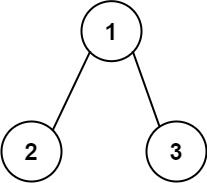
Input: root = [1,2,3]
Output: 2
Explanation: The longest consecutive path is [1, 2] or [2, 1].
Example 2:
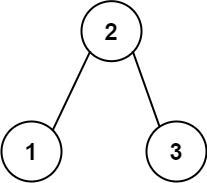
Input: root = [2,1,3]
Output: 3
Explanation: The longest consecutive path is [1, 2, 3] or [3, 2, 1].
Constraints:
- The number of nodes in the tree is in the range
[1, 3 * 104].
-3 * 104 <= Node.val <= 3 * 104
Solutions
Solution 1
PythonJavaC++Go
# Definition for a binary tree node.
# class TreeNode:
# def __init__(self, val=0, left=None, right=None):
# self.val = val
# self.left = left
# self.right = right
class Solution:
def longestConsecutive(self, root: TreeNode) -> int:
def dfs(root):
if root is None:
return [0, 0]
nonlocal ans
incr = decr = 1
i1, d1 = dfs(root.left)
i2, d2 = dfs(root.right)
if root.left:
if root.left.val + 1 == root.val:
incr = i1 + 1
if root.left.val - 1 == root.val:
decr = d1 + 1
if root.right:
if root.right.val + 1 == root.val:
incr = max(incr, i2 + 1)
if root.right.val - 1 == root.val:
decr = max(decr, d2 + 1)
ans = max(ans, incr + decr - 1)
return [incr, decr]
ans = 0
dfs(root)
return ans(code-box)
/**
* Definition for a binary tree node.
* public class TreeNode {
* int val;
* TreeNode left;
* TreeNode right;
* TreeNode() {}
* TreeNode(int val) { this.val = val; }
* TreeNode(int val, TreeNode left, TreeNode right) {
* this.val = val;
* this.left = left;
* this.right = right;
* }
* }
*/
class Solution {
private int ans;
public int longestConsecutive(TreeNode root) {
ans = 0;
dfs(root);
return ans;
}
private int[] dfs(TreeNode root) {
if (root == null) {
return new int[] {0, 0};
}
int incr = 1, decr = 1;
int[] left = dfs(root.left);
int[] right = dfs(root.right);
if (root.left != null) {
if (root.left.val + 1 == root.val) {
incr = left[0] + 1;
}
if (root.left.val - 1 == root.val) {
decr = left[1] + 1;
}
}
if (root.right != null) {
if (root.right.val + 1 == root.val) {
incr = Math.max(incr, right[0] + 1);
}
if (root.right.val - 1 == root.val) {
decr = Math.max(decr, right[1] + 1);
}
}
ans = Math.max(ans, incr + decr - 1);
return new int[] {incr, decr};
}
}(code-box)
/**
* Definition for a binary tree node.
* struct TreeNode {
* int val;
* TreeNode *left;
* TreeNode *right;
* TreeNode() : val(0), left(nullptr), right(nullptr) {}
* TreeNode(int x) : val(x), left(nullptr), right(nullptr) {}
* TreeNode(int x, TreeNode *left, TreeNode *right) : val(x), left(left), right(right) {}
* };
*/
class Solution {
public:
int ans;
int longestConsecutive(TreeNode* root) {
ans = 0;
dfs(root);
return ans;
}
vector<int> dfs(TreeNode* root) {
if (!root) return {0, 0};
int incr = 1, decr = 1;
auto left = dfs(root->left);
auto right = dfs(root->right);
if (root->left) {
if (root->left->val + 1 == root->val) incr = left[0] + 1;
if (root->left->val - 1 == root->val) decr = left[1] + 1;
}
if (root->right) {
if (root->right->val + 1 == root->val) incr = max(incr, right[0] + 1);
if (root->right->val - 1 == root->val) decr = max(decr, right[1] + 1);
}
ans = max(ans, incr + decr - 1);
return {incr, decr};
}
};(code-box)
/**
* Definition for a binary tree node.
* type TreeNode struct {
* Val int
* Left *TreeNode
* Right *TreeNode
* }
*/
func longestConsecutive(root *TreeNode) int {
ans := 0
var dfs func(root *TreeNode) []int
dfs = func(root *TreeNode) []int {
if root == nil {
return []int{0, 0}
}
incr, decr := 1, 1
left := dfs(root.Left)
right := dfs(root.Right)
if root.Left != nil {
if root.Left.Val+1 == root.Val {
incr = left[0] + 1
}
if root.Left.Val-1 == root.Val {
decr = left[1] + 1
}
}
if root.Right != nil {
if root.Right.Val+1 == root.Val {
incr = max(incr, right[0]+1)
}
if root.Right.Val-1 == root.Val {
decr = max(decr, right[1]+1)
}
}
ans = max(ans, incr+decr-1)
return []int{incr, decr}
}
dfs(root)
return ans
}(code-box)


