
Description
Convert a Binary Search Tree to a sorted Circular Doubly-Linked List in place.
You can think of the left and right pointers as synonymous to the predecessor and successor pointers in a doubly-linked list. For a circular doubly linked list, the predecessor of the first element is the last element, and the successor of the last element is the first element.
We want to do the transformation in place. After the transformation, the left pointer of the tree node should point to its predecessor, and the right pointer should point to its successor. You should return the pointer to the smallest element of the linked list.
Example 1:
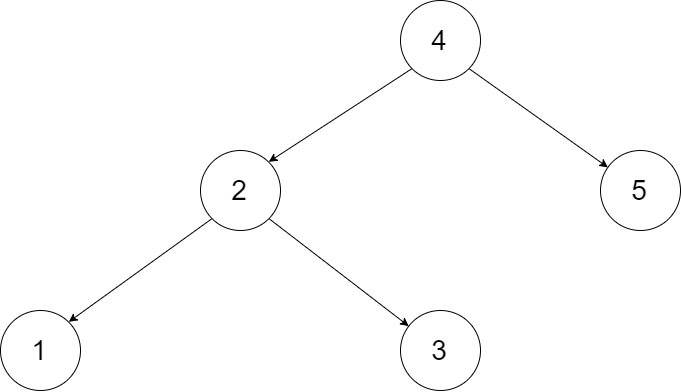
Input: root = [4,2,5,1,3]
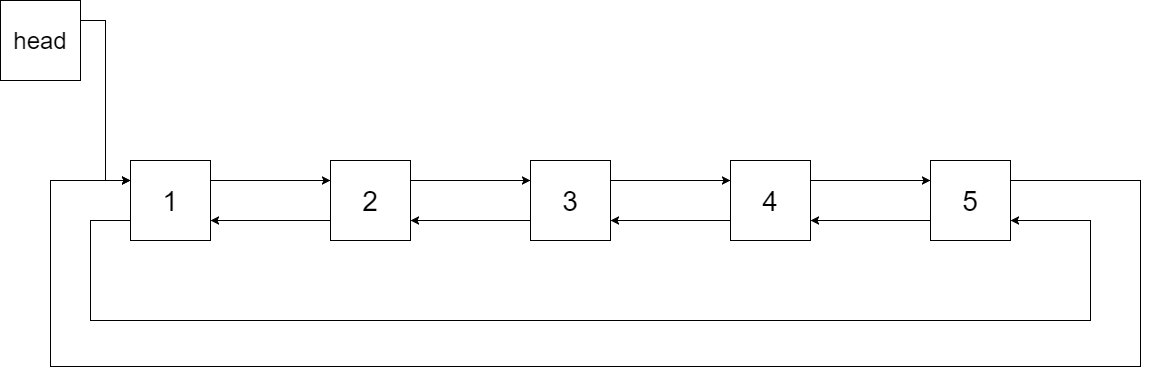 Output: [1,2,3,4,5]
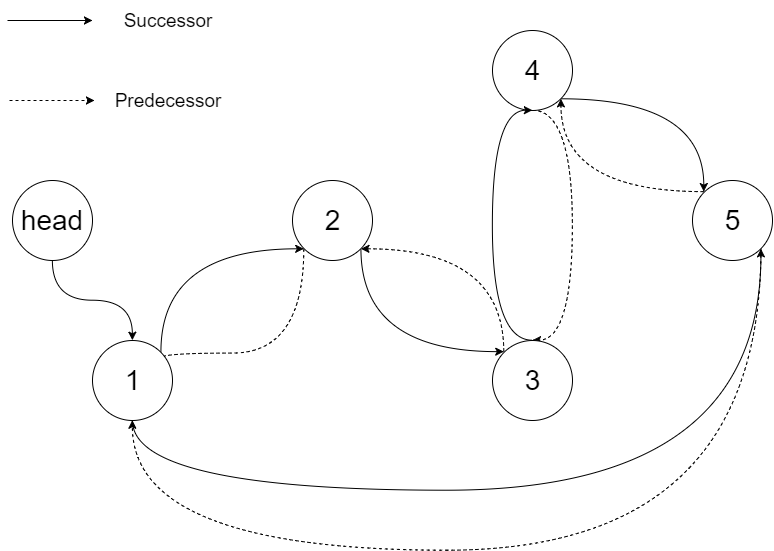
Explanation: The figure below shows the transformed BST. The solid line indicates the successor relationship, while the dashed line means the predecessor relationship.
Output: [1,2,3,4,5]
Explanation: The figure below shows the transformed BST. The solid line indicates the successor relationship, while the dashed line means the predecessor relationship.
Example 2:
Input: root = [2,1,3]
Output: [1,2,3]
Constraints:
- The number of nodes in the tree is in the range
[0, 2000].
-1000 <= Node.val <= 1000- All the values of the tree are unique.
Solutions
Solution 1
PythonJavaC++GoJavaScript
"""
# Definition for a Node.
class Node:
def __init__(self, val, left=None, right=None):
self.val = val
self.left = left
self.right = right
"""
class Solution:
def treeToDoublyList(self, root: 'Optional[Node]') -> 'Optional[Node]':
def dfs(root):
if root is None:
return
nonlocal prev, head
dfs(root.left)
if prev:
prev.right = root
root.left = prev
else:
head = root
prev = root
dfs(root.right)
if root is None:
return None
head = prev = None
dfs(root)
prev.right = head
head.left = prev
return head(code-box)
/*
// Definition for a Node.
class Node {
public int val;
public Node left;
public Node right;
public Node() {}
public Node(int _val) {
val = _val;
}
public Node(int _val,Node _left,Node _right) {
val = _val;
left = _left;
right = _right;
}
};
*/
class Solution {
private Node prev;
private Node head;
public Node treeToDoublyList(Node root) {
if (root == null) {
return null;
}
prev = null;
head = null;
dfs(root);
prev.right = head;
head.left = prev;
return head;
}
private void dfs(Node root) {
if (root == null) {
return;
}
dfs(root.left);
if (prev != null) {
prev.right = root;
root.left = prev;
} else {
head = root;
}
prev = root;
dfs(root.right);
}
}(code-box)
/*
// Definition for a Node.
class Node {
public:
int val;
Node* left;
Node* right;
Node() {}
Node(int _val) {
val = _val;
left = NULL;
right = NULL;
}
Node(int _val, Node* _left, Node* _right) {
val = _val;
left = _left;
right = _right;
}
};
*/
class Solution {
public:
Node* prev;
Node* head;
Node* treeToDoublyList(Node* root) {
if (!root) return nullptr;
prev = nullptr;
head = nullptr;
dfs(root);
prev->right = head;
head->left = prev;
return head;
}
void dfs(Node* root) {
if (!root) return;
dfs(root->left);
if (prev) {
prev->right = root;
root->left = prev;
} else
head = root;
prev = root;
dfs(root->right);
}
};(code-box)
/**
* Definition for a Node.
* type Node struct {
* Val int
* Left *Node
* Right *Node
* }
*/
func treeToDoublyList(root *Node) *Node {
if root == nil {
return root
}
var prev, head *Node
var dfs func(root *Node)
dfs = func(root *Node) {
if root == nil {
return
}
dfs(root.Left)
if prev != nil {
prev.Right = root
root.Left = prev
} else {
head = root
}
prev = root
dfs(root.Right)
}
dfs(root)
prev.Right = head
head.Left = prev
return head
}(code-box)
/**
* // Definition for a Node.
* function Node(val, left, right) {
* this.val = val;
* this.left = left;
* this.right = right;
* };
*/
/**
* @param {Node} root
* @return {Node}
*/
var treeToDoublyList = function (root) {
if (!root) return root;
let prev = null;
let head = null;
function dfs(root) {
if (!root) return;
dfs(root.left);
if (prev) {
prev.right = root;
root.left = prev;
} else {
head = root;
}
prev = root;
dfs(root.right);
}
dfs(root);
prev.right = head;
head.left = prev;
return head;
};(code-box)


