
Description
Given the root of a binary tree, return the sum of all left leaves.
A leaf is a node with no children. A left leaf is a leaf that is the left child of another node.
Example 1:
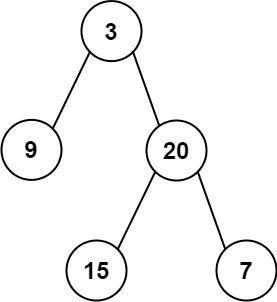
Input: root = [3,9,20,null,null,15,7]
Output: 24
Explanation: There are two left leaves in the binary tree, with values 9 and 15 respectively.
Example 2:
Input: root = [1]
Output: 0
Constraints:
- The number of nodes in the tree is in the range
[1, 1000].
-1000 <= Node.val <= 1000
Solutions
Solution 1: Recursion
First, we check if root is null. If it is, we return 0.
Otherwise, we recursively call the sumOfLeftLeaves function to calculate the sum of all left leaves in root's right subtree, and assign the result to the answer variable ans. Then we check if root's left child exists. If it does, we check if it is a leaf node. If it is a leaf node, we add its value to the answer variable ans. Otherwise, we recursively call the sumOfLeftLeaves function to calculate the sum of all left leaves in root's left subtree, and add the result to the answer variable ans.
Finally, we return the answer.
The time complexity is O(n), and the space complexity is O(n), where n is the number of nodes in the binary tree.
PythonJavaC++GoTypeScriptRustC
# Definition for a binary tree node.
# class TreeNode:
# def __init__(self, val=0, left=None, right=None):
# self.val = val
# self.left = left
# self.right = right
class Solution:
def sumOfLeftLeaves(self, root: Optional[TreeNode]) -> int:
if root is None:
return 0
ans = self.sumOfLeftLeaves(root.right)
if root.left:
if root.left.left == root.left.right:
ans += root.left.val
else:
ans += self.sumOfLeftLeaves(root.left)
return ans(code-box)
/**
* Definition for a binary tree node.
* public class TreeNode {
* int val;
* TreeNode left;
* TreeNode right;
* TreeNode() {}
* TreeNode(int val) { this.val = val; }
* TreeNode(int val, TreeNode left, TreeNode right) {
* this.val = val;
* this.left = left;
* this.right = right;
* }
* }
*/
class Solution {
public int sumOfLeftLeaves(TreeNode root) {
if (root == null) {
return 0;
}
int ans = sumOfLeftLeaves(root.right);
if (root.left != null) {
if (root.left.left == root.left.right) {
ans += root.left.val;
} else {
ans += sumOfLeftLeaves(root.left);
}
}
return ans;
}
}(code-box)
/**
* Definition for a binary tree node.
* struct TreeNode {
* int val;
* TreeNode *left;
* TreeNode *right;
* TreeNode() : val(0), left(nullptr), right(nullptr) {}
* TreeNode(int x) : val(x), left(nullptr), right(nullptr) {}
* TreeNode(int x, TreeNode *left, TreeNode *right) : val(x), left(left), right(right) {}
* };
*/
class Solution {
public:
int sumOfLeftLeaves(TreeNode* root) {
if (!root) {
return 0;
}
int ans = sumOfLeftLeaves(root->right);
if (root->left) {
if (!root->left->left && !root->left->right) {
ans += root->left->val;
} else {
ans += sumOfLeftLeaves(root->left);
}
}
return ans;
}
};(code-box)
/**
* Definition for a binary tree node.
* type TreeNode struct {
* Val int
* Left *TreeNode
* Right *TreeNode
* }
*/
func sumOfLeftLeaves(root *TreeNode) int {
if root == nil {
return 0
}
ans := sumOfLeftLeaves(root.Right)
if root.Left != nil {
if root.Left.Left == root.Left.Right {
ans += root.Left.Val
} else {
ans += sumOfLeftLeaves(root.Left)
}
}
return ans
}(code-box)
/**
* Definition for a binary tree node.
* class TreeNode {
* val: number
* left: TreeNode | null
* right: TreeNode | null
* constructor(val?: number, left?: TreeNode | null, right?: TreeNode | null) {
* this.val = (val===undefined ? 0 : val)
* this.left = (left===undefined ? null : left)
* this.right = (right===undefined ? null : right)
* }
* }
*/
function sumOfLeftLeaves(root: TreeNode | null): number {
if (!root) {
return 0;
}
let ans = sumOfLeftLeaves(root.right);
if (root.left) {
if (root.left.left === root.left.right) {
ans += root.left.val;
} else {
ans += sumOfLeftLeaves(root.left);
}
}
return ans;
}(code-box)
// Definition for a binary tree node.
// #[derive(Debug, PartialEq, Eq)]
// pub struct TreeNode {
// pub val: i32,
// pub left: Option<Rc<RefCell<TreeNode>>>,
// pub right: Option<Rc<RefCell<TreeNode>>>,
// }
//
// impl TreeNode {
// #[inline]
// pub fn new(val: i32) -> Self {
// TreeNode {
// val,
// left: None,
// right: None
// }
// }
// }
use std::cell::RefCell;
use std::rc::Rc;
impl Solution {
fn dfs(root: &Option<Rc<RefCell<TreeNode>>>, is_left: bool) -> i32 {
if root.is_none() {
return 0;
}
let node = root.as_ref().unwrap().borrow();
let left = &node.left;
let right = &node.right;
if left.is_none() && right.is_none() {
if is_left {
return node.val;
}
return 0;
}
Self::dfs(left, true) + Self::dfs(right, false)
}
pub fn sum_of_left_leaves(root: Option<Rc<RefCell<TreeNode>>>) -> i32 {
Self::dfs(&root, false)
}
}(code-box)
/**
* Definition for a binary tree node.
* struct TreeNode {
* int val;
* struct TreeNode *left;
* struct TreeNode *right;
* };
*/
int sumOfLeftLeaves(struct TreeNode* root) {
if (!root) {
return 0;
}
int ans = sumOfLeftLeaves(root->right);
if (root->left) {
if (!root->left->left && !root->left->right) {
ans += root->left->val;
} else {
ans += sumOfLeftLeaves(root->left);
}
}
return ans;
}(code-box)
Solution 2: Stack
We can also convert the recursion in Solution 1 to iteration, using a stack to simulate the recursion process.
Similar to Solution 1, we first check if root is null. If it is, we return 0.
Otherwise, we initialize the answer variable ans to 0, and then initialize a stack stk and add root to the stack.
While the stack is not empty, we pop the top element root from the stack. If root's left child exists, we check if it is a leaf node. If it is a leaf node, we add its value to the answer variable ans. Otherwise, we add its left child to the stack. Then we check if root's right child exists. If it does, we add it to the stack.
Finally, we return the answer.
The time complexity is O(n), and the space complexity is O(n), where n is the number of nodes in the binary tree.
PythonJavaC++GoTypeScript
# Definition for a binary tree node.
# class TreeNode:
# def __init__(self, val=0, left=None, right=None):
# self.val = val
# self.left = left
# self.right = right
class Solution:
def sumOfLeftLeaves(self, root: Optional[TreeNode]) -> int:
if root is None:
return 0
ans = 0
stk = [root]
while stk:
root = stk.pop()
if root.left:
if root.left.left == root.left.right:
ans += root.left.val
else:
stk.append(root.left)
if root.right:
stk.append(root.right)
return ans(code-box)
/**
* Definition for a binary tree node.
* public class TreeNode {
* int val;
* TreeNode left;
* TreeNode right;
* TreeNode() {}
* TreeNode(int val) { this.val = val; }
* TreeNode(int val, TreeNode left, TreeNode right) {
* this.val = val;
* this.left = left;
* this.right = right;
* }
* }
*/
class Solution {
public int sumOfLeftLeaves(TreeNode root) {
if (root == null) {
return 0;
}
Deque<TreeNode> stk = new ArrayDeque<>();
stk.push(root);
int ans = 0;
while (!stk.isEmpty()) {
root = stk.pop();
if (root.left != null) {
if (root.left.left == root.left.right) {
ans += root.left.val;
} else {
stk.push(root.left);
}
}
if (root.right != null) {
stk.push(root.right);
}
}
return ans;
}
}(code-box)
/**
* Definition for a binary tree node.
* struct TreeNode {
* int val;
* TreeNode *left;
* TreeNode *right;
* TreeNode() : val(0), left(nullptr), right(nullptr) {}
* TreeNode(int x) : val(x), left(nullptr), right(nullptr) {}
* TreeNode(int x, TreeNode *left, TreeNode *right) : val(x), left(left), right(right) {}
* };
*/
class Solution {
public:
int sumOfLeftLeaves(TreeNode* root) {
if (!root) {
return 0;
}
int ans = 0;
stack<TreeNode*> stk{{root}};
while (!stk.empty()) {
root = stk.top(), stk.pop();
if (root->left) {
if (!root->left->left && !root->left->right) {
ans += root->left->val;
} else {
stk.push(root->left);
}
}
if (root->right) {
stk.push(root->right);
}
}
return ans;
}
};(code-box)
/**
* Definition for a binary tree node.
* type TreeNode struct {
* Val int
* Left *TreeNode
* Right *TreeNode
* }
*/
func sumOfLeftLeaves(root *TreeNode) (ans int) {
if root == nil {
return 0
}
stk := []*TreeNode{root}
for len(stk) > 0 {
root = stk[len(stk)-1]
stk = stk[:len(stk)-1]
if root.Left != nil {
if root.Left.Left == root.Left.Right {
ans += root.Left.Val
} else {
stk = append(stk, root.Left)
}
}
if root.Right != nil {
stk = append(stk, root.Right)
}
}
return
}(code-box)
/**
* Definition for a binary tree node.
* class TreeNode {
* val: number
* left: TreeNode | null
* right: TreeNode | null
* constructor(val?: number, left?: TreeNode | null, right?: TreeNode | null) {
* this.val = (val===undefined ? 0 : val)
* this.left = (left===undefined ? null : left)
* this.right = (right===undefined ? null : right)
* }
* }
*/
function sumOfLeftLeaves(root: TreeNode | null): number {
if (!root) {
return 0;
}
let ans = 0;
const stk: TreeNode[] = [root];
while (stk.length) {
const { left, right } = stk.pop()!;
if (left) {
if (left.left === left.right) {
ans += left.val;
} else {
stk.push(left);
}
}
if (right) {
stk.push(right);
}
}
return ans;
}(code-box)


