


Description
Given a 0-indexed n x n integer matrix grid, return the number of pairs (ri, cj) such that row ri and column cj are equal.
A row and column pair is considered equal if they contain the same elements in the same order (i.e., an equal array).
Example 1:
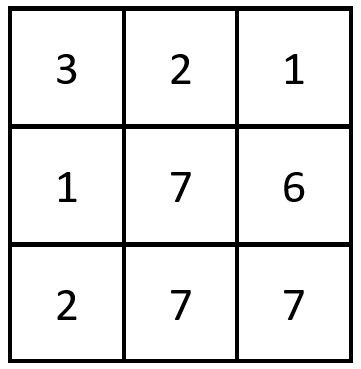
Input: grid = [[3,2,1],[1,7,6],[2,7,7]]
Output: 1
Explanation: There is 1 equal row and column pair:
- (Row 2, Column 1): [2,7,7]
Example 2:
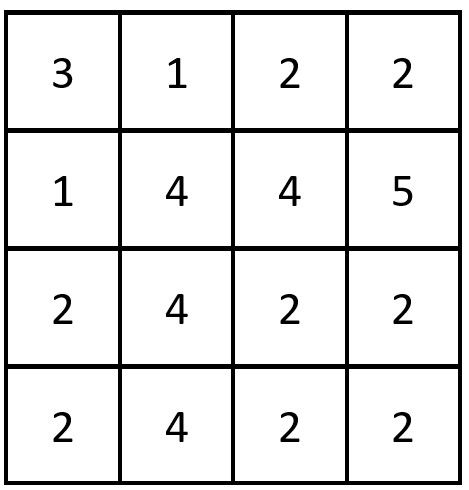
Input: grid = [[3,1,2,2],[1,4,4,5],[2,4,2,2],[2,4,2,2]]
Output: 3
Explanation: There are 3 equal row and column pairs:
- (Row 0, Column 0): [3,1,2,2]
- (Row 2, Column 2): [2,4,2,2]
- (Row 3, Column 2): [2,4,2,2]
Constraints:
n == grid.length == grid[i].length1 <= n <= 2001 <= grid[i][j] <= 105
Solutions
Solution 1: Simulation
We directly compare each row and column of the matrix grid. If they are equal, then it is a pair of equal row-column pairs, and we increment the answer by one.
The time complexity is O(n3), where n is the number of rows or columns in the matrix grid. The space complexity is O(1).
PythonJavaC++GoTypeScript
class Solution: def equalPairs(self, grid: List[List[int]]) -> int: n = len(grid) ans = 0 for i in range(n): for j in range(n): ans += all(grid[i][k] == grid[k][j] for k in range(n)) return ans(code-box)
