Description
Given the root of a binary tree, return the number of nodes where the value of the node is equal to the sum of the values of its descendants.
A descendant of a node x is any node that is on the path from node x to some leaf node. The sum is considered to be 0 if the node has no descendants.
Example 1:
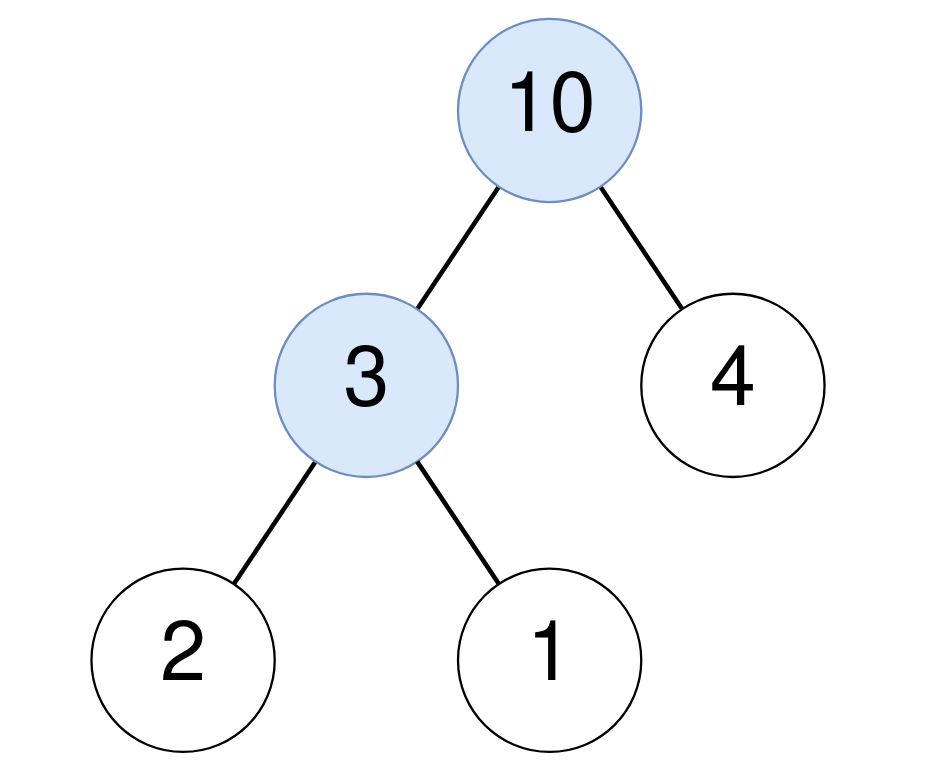
Input: root = [10,3,4,2,1]
Output: 2
Explanation:
For the node with value 10: The sum of its descendants is 3+4+2+1 = 10.
For the node with value 3: The sum of its descendants is 2+1 = 3.
Example 2:
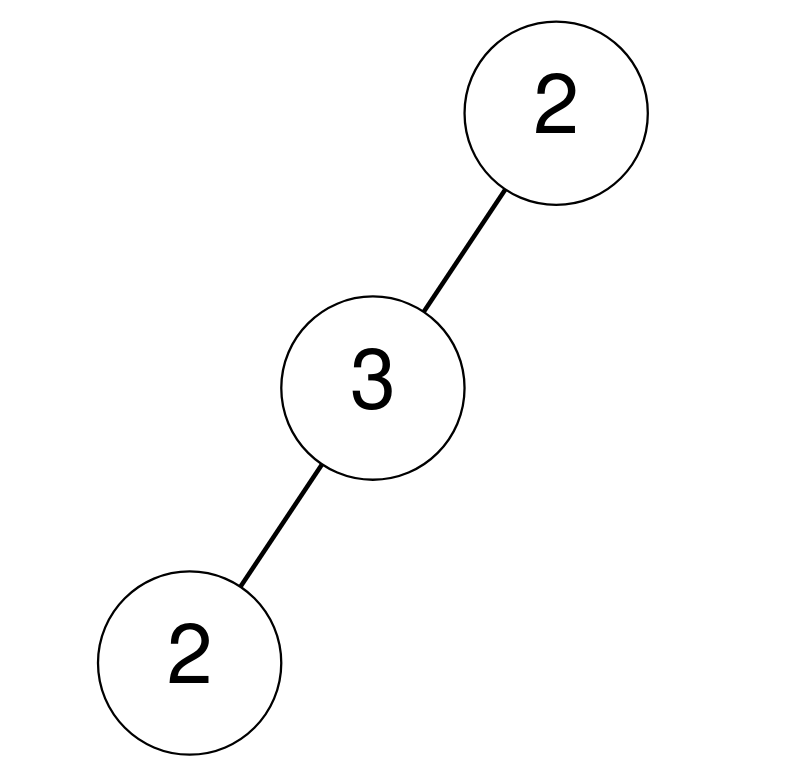
Input: root = [2,3,null,2,null]
Output: 0
Explanation:
No node has a value that is equal to the sum of its descendants.
Example 3:
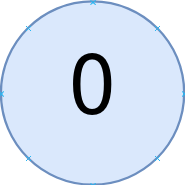
Input: root = [0]
Output: 1
For the node with value 0: The sum of its descendants is 0 since it has no descendants.
Constraints:
- The number of nodes in the tree is in the range
[1, 105].
0 <= Node.val <= 105
Solutions
Solution 1
PythonJavaC++Go
# Definition for a binary tree node.
# class TreeNode:
# def __init__(self, val=0, left=None, right=None):
# self.val = val
# self.left = left
# self.right = right
class Solution:
def equalToDescendants(self, root: Optional[TreeNode]) -> int:
def dfs(root):
if root is None:
return 0
l, r = dfs(root.left), dfs(root.right)
if l + r == root.val:
nonlocal ans
ans += 1
return root.val + l + r
ans = 0
dfs(root)
return ans(code-box)
/**
* Definition for a binary tree node.
* public class TreeNode {
* int val;
* TreeNode left;
* TreeNode right;
* TreeNode() {}
* TreeNode(int val) { this.val = val; }
* TreeNode(int val, TreeNode left, TreeNode right) {
* this.val = val;
* this.left = left;
* this.right = right;
* }
* }
*/
class Solution {
private int ans;
public int equalToDescendants(TreeNode root) {
dfs(root);
return ans;
}
private int dfs(TreeNode root) {
if (root == null) {
return 0;
}
int l = dfs(root.left);
int r = dfs(root.right);
if (l + r == root.val) {
++ans;
}
return root.val + l + r;
}
}(code-box)
/**
* Definition for a binary tree node.
* struct TreeNode {
* int val;
* TreeNode *left;
* TreeNode *right;
* TreeNode() : val(0), left(nullptr), right(nullptr) {}
* TreeNode(int x) : val(x), left(nullptr), right(nullptr) {}
* TreeNode(int x, TreeNode *left, TreeNode *right) : val(x), left(left), right(right) {}
* };
*/
class Solution {
public:
int equalToDescendants(TreeNode* root) {
int ans = 0;
function<long long(TreeNode*)> dfs = [&](TreeNode* root) -> long long {
if (!root) {
return 0;
}
auto l = dfs(root->left);
auto r = dfs(root->right);
ans += l + r == root->val;
return root->val + l + r;
};
dfs(root);
return ans;
}
};(code-box)
/**
* Definition for a binary tree node.
* type TreeNode struct {
* Val int
* Left *TreeNode
* Right *TreeNode
* }
*/
func equalToDescendants(root *TreeNode) (ans int) {
var dfs func(*TreeNode) int
dfs = func(root *TreeNode) int {
if root == nil {
return 0
}
l, r := dfs(root.Left), dfs(root.Right)
if l+r == root.Val {
ans++
}
return root.Val + l + r
}
dfs(root)
return
}(code-box)


