
Description
Given the root of a binary tree, return the postorder traversal of its nodes' values.
Example 1:
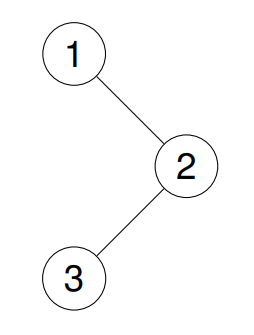
Input: root = [1,null,2,3]
Output: [3,2,1]
Explanation:
Example 2:
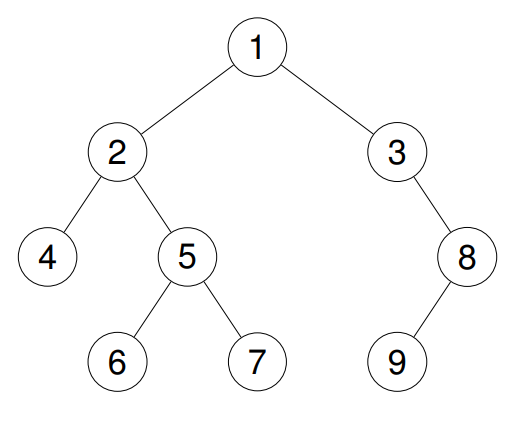
Input: root = [1,2,3,4,5,null,8,null,null,6,7,9]
Output: [4,6,7,5,2,9,8,3,1]
Explanation:
Example 3:
Input: root = []
Output: []
Example 4:
Input: root = [1]
Output: [1]
Constraints:
- The number of the nodes in the tree is in the range
[0, 100].
-100 <= Node.val <= 100
Follow up: Recursive solution is trivial, could you do it iteratively?
Solutions
Solution 1: Recursion
We first recursively traverse the left and right subtrees, then visit the root node.
The time complexity is O(n), and the space complexity is O(n). Here, n is the number of nodes in the binary tree. The space complexity mainly depends on the stack space used for recursive calls.
PythonJavaC++GoTypeScriptRust
# Definition for a binary tree node.
# class TreeNode:
# def __init__(self, val=0, left=None, right=None):
# self.val = val
# self.left = left
# self.right = right
class Solution:
def postorderTraversal(self, root: Optional[TreeNode]) -> List[int]:
def dfs(root):
if root is None:
return
dfs(root.left)
dfs(root.right)
ans.append(root.val)
ans = []
dfs(root)
return ans(code-box)
/**
* Definition for a binary tree node.
* public class TreeNode {
* int val;
* TreeNode left;
* TreeNode right;
* TreeNode() {}
* TreeNode(int val) { this.val = val; }
* TreeNode(int val, TreeNode left, TreeNode right) {
* this.val = val;
* this.left = left;
* this.right = right;
* }
* }
*/
class Solution {
private List<Integer> ans = new ArrayList<>();
public List<Integer> postorderTraversal(TreeNode root) {
dfs(root);
return ans;
}
private void dfs(TreeNode root) {
if (root == null) {
return;
}
dfs(root.left);
dfs(root.right);
ans.add(root.val);
}
}(code-box)
/**
* Definition for a binary tree node.
* struct TreeNode {
* int val;
* TreeNode *left;
* TreeNode *right;
* TreeNode() : val(0), left(nullptr), right(nullptr) {}
* TreeNode(int x) : val(x), left(nullptr), right(nullptr) {}
* TreeNode(int x, TreeNode *left, TreeNode *right) : val(x), left(left), right(right) {}
* };
*/
class Solution {
public:
vector<int> postorderTraversal(TreeNode* root) {
vector<int> ans;
function<void(TreeNode*)> dfs = [&](TreeNode* root) {
if (!root) {
return;
}
dfs(root->left);
dfs(root->right);
ans.push_back(root->val);
};
dfs(root);
return ans;
}
};(code-box)
/**
* Definition for a binary tree node.
* type TreeNode struct {
* Val int
* Left *TreeNode
* Right *TreeNode
* }
*/
func postorderTraversal(root *TreeNode) (ans []int) {
var dfs func(*TreeNode)
dfs = func(root *TreeNode) {
if root == nil {
return
}
dfs(root.Left)
dfs(root.Right)
ans = append(ans, root.Val)
}
dfs(root)
return
}(code-box)
/**
* Definition for a binary tree node.
* class TreeNode {
* val: number
* left: TreeNode | null
* right: TreeNode | null
* constructor(val?: number, left?: TreeNode | null, right?: TreeNode | null) {
* this.val = (val===undefined ? 0 : val)
* this.left = (left===undefined ? null : left)
* this.right = (right===undefined ? null : right)
* }
* }
*/
function postorderTraversal(root: TreeNode | null): number[] {
const ans: number[] = [];
const dfs = (root: TreeNode | null) => {
if (!root) {
return;
}
dfs(root.left);
dfs(root.right);
ans.push(root.val);
};
dfs(root);
return ans;
}(code-box)
// Definition for a binary tree node.
// #[derive(Debug, PartialEq, Eq)]
// pub struct TreeNode {
// pub val: i32,
// pub left: Option<Rc<RefCell<TreeNode>>>,
// pub right: Option<Rc<RefCell<TreeNode>>>,
// }
//
// impl TreeNode {
// #[inline]
// pub fn new(val: i32) -> Self {
// TreeNode {
// val,
// left: None,
// right: None
// }
// }
// }
use std::cell::RefCell;
use std::rc::Rc;
impl Solution {
fn dfs(root: &Option<Rc<RefCell<TreeNode>>>, ans: &mut Vec<i32>) {
if root.is_none() {
return;
}
let node = root.as_ref().unwrap().borrow();
Self::dfs(&node.left, ans);
Self::dfs(&node.right, ans);
ans.push(node.val);
}
pub fn postorder_traversal(root: Option<Rc<RefCell<TreeNode>>>) -> Vec<i32> {
let mut ans = vec![];
Self::dfs(&root, &mut ans);
ans
}
}(code-box)
Solution 2: Stack Implementation for Postorder Traversal
The order of preorder traversal is: root, left, right. If we change the order of the left and right children, the order becomes: root, right, left. Finally, reversing the result gives us the postorder traversal result.
Therefore, the idea of using a stack to implement non-recursive traversal is as follows:
- Define a stack stk, and first push the root node into the stack.
- If the stack is not empty, pop a node from the stack each time.
- Process the node.
- First push the left child of the node into the stack, then push the right child of the node into the stack (if there are child nodes).
- Repeat steps 2-4.
- Reverse the result to get the postorder traversal result.
The time complexity is O(n), and the space complexity is O(n). Here, n is the number of nodes in the binary tree. The space complexity mainly depends on the stack space.
PythonJavaC++GoTypeScript
# Definition for a binary tree node.
# class TreeNode:
# def __init__(self, val=0, left=None, right=None):
# self.val = val
# self.left = left
# self.right = right
class Solution:
def postorderTraversal(self, root: Optional[TreeNode]) -> List[int]:
ans = []
if root is None:
return ans
stk = [root]
while stk:
node = stk.pop()
ans.append(node.val)
if node.left:
stk.append(node.left)
if node.right:
stk.append(node.right)
return ans[::-1](code-box)
/**
* Definition for a binary tree node.
* public class TreeNode {
* int val;
* TreeNode left;
* TreeNode right;
* TreeNode() {}
* TreeNode(int val) { this.val = val; }
* TreeNode(int val, TreeNode left, TreeNode right) {
* this.val = val;
* this.left = left;
* this.right = right;
* }
* }
*/
class Solution {
public List<Integer> postorderTraversal(TreeNode root) {
LinkedList<Integer> ans = new LinkedList<>();
if (root == null) {
return ans;
}
Deque<TreeNode> stk = new ArrayDeque<>();
stk.push(root);
while (!stk.isEmpty()) {
TreeNode node = stk.pop();
ans.addFirst(node.val);
if (node.left != null) {
stk.push(node.left);
}
if (node.right != null) {
stk.push(node.right);
}
}
return ans;
}
}(code-box)
/**
* Definition for a binary tree node.
* struct TreeNode {
* int val;
* TreeNode *left;
* TreeNode *right;
* TreeNode() : val(0), left(nullptr), right(nullptr) {}
* TreeNode(int x) : val(x), left(nullptr), right(nullptr) {}
* TreeNode(int x, TreeNode *left, TreeNode *right) : val(x), left(left), right(right) {}
* };
*/
class Solution {
public:
vector<int> postorderTraversal(TreeNode* root) {
vector<int> ans;
if (!root) {
return ans;
}
stack<TreeNode*> stk;
stk.push(root);
while (stk.size()) {
auto node = stk.top();
stk.pop();
ans.push_back(node->val);
if (node->left) {
stk.push(node->left);
}
if (node->right) {
stk.push(node->right);
}
}
reverse(ans.begin(), ans.end());
return ans;
}
};(code-box)
/**
* Definition for a binary tree node.
* type TreeNode struct {
* Val int
* Left *TreeNode
* Right *TreeNode
* }
*/
func postorderTraversal(root *TreeNode) (ans []int) {
if root == nil {
return
}
stk := []*TreeNode{root}
for len(stk) > 0 {
node := stk[len(stk)-1]
stk = stk[:len(stk)-1]
ans = append(ans, node.Val)
if node.Left != nil {
stk = append(stk, node.Left)
}
if node.Right != nil {
stk = append(stk, node.Right)
}
}
for i, j := 0, len(ans)-1; i < j; i, j = i+1, j-1 {
ans[i], ans[j] = ans[j], ans[i]
}
return
}(code-box)
/**
* Definition for a binary tree node.
* class TreeNode {
* val: number
* left: TreeNode | null
* right: TreeNode | null
* constructor(val?: number, left?: TreeNode | null, right?: TreeNode | null) {
* this.val = (val===undefined ? 0 : val)
* this.left = (left===undefined ? null : left)
* this.right = (right===undefined ? null : right)
* }
* }
*/
function postorderTraversal(root: TreeNode | null): number[] {
const ans: number[] = [];
if (!root) {
return ans;
}
const stk: TreeNode[] = [root];
while (stk.length) {
const { left, right, val } = stk.pop();
ans.push(val);
left && stk.push(left);
right && stk.push(right);
}
ans.reverse();
return ans;
}(code-box)
Solution 3: Morris Implementation for Postorder Traversal
Morris traversal does not require a stack, and its space complexity is O(1). The core idea is:
Traverse the binary tree nodes,
- If the right subtree of the current node
root is empty, add the current node value to the result list ans, and update the current node to root.left.
- If the right subtree of the current node
root is not empty, find the leftmost node next of the right subtree (which is the successor of the root node in inorder traversal):
- If the left subtree of the successor node
next is empty, add the current node value to the result list ans, then point the left subtree of the successor node to the current node root, and update the current node to root.right.
- If the left subtree of the successor node
next is not empty, point the left subtree of the successor node to null (i.e., disconnect next and root), and update the current node to root.left.
- Repeat the above steps until the binary tree node is null, and the traversal ends.
- Finally, return the reverse of the result list.
The idea of Morris postorder traversal is consistent with Morris preorder traversal, just change the "root-left-right" of preorder to "root-right-left", and finally reverse the result to become "left-right-root".
The time complexity is O(n), where n is the number of nodes in the binary tree. The space complexity is O(1).
PythonJavaC++GoTypeScript
# Definition for a binary tree node.
# class TreeNode:
# def __init__(self, val=0, left=None, right=None):
# self.val = val
# self.left = left
# self.right = right
class Solution:
def postorderTraversal(self, root: Optional[TreeNode]) -> List[int]:
ans = []
while root:
if root.right is None:
ans.append(root.val)
root = root.left
else:
next = root.right
while next.left and next.left != root:
next = next.left
if next.left != root:
ans.append(root.val)
next.left = root
root = root.right
else:
next.left = None
root = root.left
return ans[::-1](code-box)
/**
* Definition for a binary tree node.
* public class TreeNode {
* int val;
* TreeNode left;
* TreeNode right;
* TreeNode() {}
* TreeNode(int val) { this.val = val; }
* TreeNode(int val, TreeNode left, TreeNode right) {
* this.val = val;
* this.left = left;
* this.right = right;
* }
* }
*/
class Solution {
public List<Integer> postorderTraversal(TreeNode root) {
LinkedList<Integer> ans = new LinkedList<>();
while (root != null) {
if (root.right == null) {
ans.addFirst(root.val);
root = root.left;
} else {
TreeNode next = root.right;
while (next.left != null && next.left != root) {
next = next.left;
}
if (next.left == null) {
ans.addFirst(root.val);
next.left = root;
root = root.right;
} else {
next.left = null;
root = root.left;
}
}
}
return ans;
}
}(code-box)
/**
* Definition for a binary tree node.
* struct TreeNode {
* int val;
* TreeNode *left;
* TreeNode *right;
* TreeNode() : val(0), left(nullptr), right(nullptr) {}
* TreeNode(int x) : val(x), left(nullptr), right(nullptr) {}
* TreeNode(int x, TreeNode *left, TreeNode *right) : val(x), left(left), right(right) {}
* };
*/
class Solution {
public:
vector<int> postorderTraversal(TreeNode* root) {
vector<int> ans;
while (root) {
if (!root->right) {
ans.push_back(root->val);
root = root->left;
} else {
TreeNode* next = root->right;
while (next->left && next->left != root) {
next = next->left;
}
if (next->left != root) {
ans.push_back(root->val);
next->left = root;
root = root->right;
} else {
next->left = nullptr;
root = root->left;
}
}
}
reverse(ans.begin(), ans.end());
return ans;
}
};(code-box)
/**
* Definition for a binary tree node.
* type TreeNode struct {
* Val int
* Left *TreeNode
* Right *TreeNode
* }
*/
func postorderTraversal(root *TreeNode) (ans []int) {
for root != nil {
if root.Right == nil {
ans = append([]int{root.Val}, ans...)
root = root.Left
} else {
next := root.Right
for next.Left != nil && next.Left != root {
next = next.Left
}
if next.Left == nil {
ans = append([]int{root.Val}, ans...)
next.Left = root
root = root.Right
} else {
next.Left = nil
root = root.Left
}
}
}
return
}(code-box)
/**
* Definition for a binary tree node.
* class TreeNode {
* val: number
* left: TreeNode | null
* right: TreeNode | null
* constructor(val?: number, left?: TreeNode | null, right?: TreeNode | null) {
* this.val = (val===undefined ? 0 : val)
* this.left = (left===undefined ? null : left)
* this.right = (right===undefined ? null : right)
* }
* }
*/
function postorderTraversal(root: TreeNode | null): number[] {
const ans: number[] = [];
while (root !== null) {
const { val, left, right } = root;
if (right === null) {
ans.push(val);
root = left;
} else {
let next = right;
while (next.left !== null && next.left !== root) {
next = next.left;
}
if (next.left === null) {
ans.push(val);
next.left = root;
root = right;
} else {
next.left = null;
root = left;
}
}
}
return ans.reverse();
}(code-box)


